Ruto Launches Ksh 500 Million Minority Scholarship Plan to Expand Education Access
 admin
admin 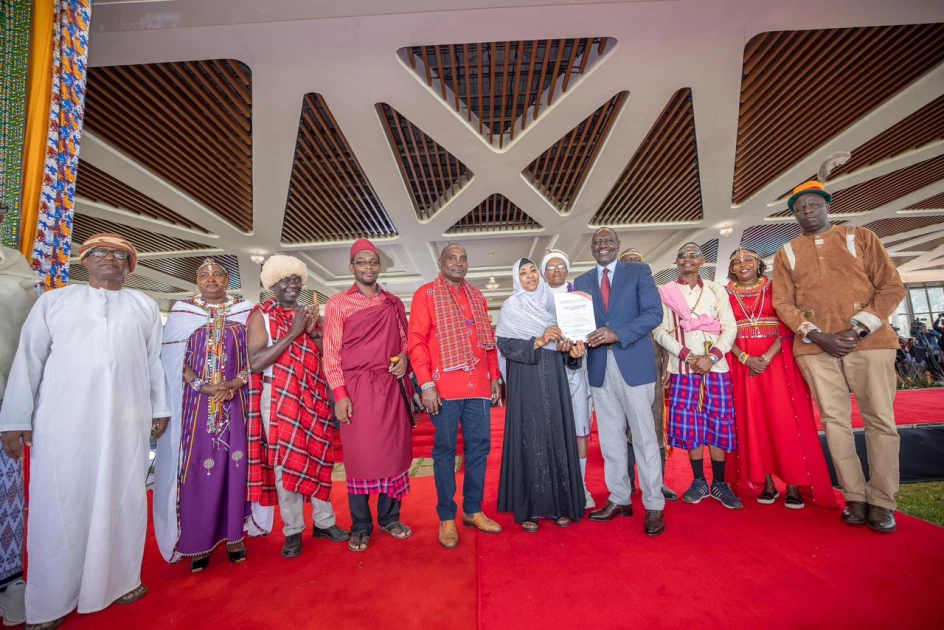
President William Ruto has directed the establishment of a Ksh.500 million annual National Minority Scholarship Programme aimed at expanding access to quality education for minority communities across Kenya. The programme is designed to support children from indigent minority and marginalised backgrounds, ensuring they can pursue both secondary and tertiary education without financial barriers.
Speaking during the International Day for Minority Rights at State House on Thursday, President Ruto explained that the scholarship programme will be implemented in partnership with private sector players. This collaboration is expected to strengthen sustainability while widening opportunities for learners who have historically been excluded from mainstream education systems. The initiative places education at the center of long-term social and economic inclusion for minority groups.
Alongside the scholarship programme, President Ruto announced that the Ministry of Education will allocate Ksh.200 million annually to an Education Infrastructure Fund. This fund will be used to construct, upgrade, and equip schools and middle-level colleges in minority and marginalised regions. The investment seeks to address persistent infrastructure gaps that have limited learning outcomes and access in these areas for decades.
Beyond education, the President issued further directives to improve living conditions in minority communities. He instructed the Ministries of Water, Roads, and Health, working together with the Equalisation Fund, to prioritise marginalised regions in the provision of clean water, access roads, and health facilities. These interventions are intended to create an enabling environment where education and economic participation can thrive.
How will the minority scholarship programme support marginalised communities?
The National Minority Scholarship Programme is structured to directly target learners from indigent backgrounds within minority and marginalised communities. By covering both secondary and tertiary education, the programme aims to reduce dropout rates and increase transition into higher education. President Ruto emphasised that access to education is a key driver of long-term equality and national cohesion.
The scholarship initiative is anchored within the newly launched National Policy on Ethnic Minorities, Indigenous and Marginalised Communities 2025 to 2035. This policy framework seeks to address systemic challenges affecting these communities through coordinated government action. It establishes a Minorities and Marginalised Communities Directorate as the central coordinating unit and provides for the creation of a National Council for Ethnic Minorities and Marginalised Communities through legislation.
“This guarantees a permanent, authoritative voice for minority concerns across government, with focal points in every ministry and county,” Ruto noted.
To ensure immediate implementation, the President directed that the Minorities and Marginalised Communities Directorate be established within the Office of the President. This move places oversight at the highest level of government, reinforcing accountability and policy coherence across ministries and counties.
What changes does the new minorities policy introduce?
The policy introduces significant structural reforms aimed at strengthening representation and service delivery for minority groups. Governors have been directed to establish County Minority Inclusion Units and to domesticate the policy in their next County Integrated Development Plans. This approach ensures that inclusion efforts are embedded in county-level planning and budgeting processes.
President Ruto also elevated the Minority Unit into a semiautonomous agency with legal and financial authority to coordinate, implement, and safeguard matters concerning minority and marginalised communities nationwide. This elevation is expected to improve efficiency and reduce bureaucratic delays.
“The Attorney-General, in consultation with the Kenya Law Reform Commission, shall commence drafting the necessary legislation to establish the National Council and align existing laws with this policy,” he noted.
President Ruto maintained that these measures mark a new era of inclusion, dignity, and shared progress. He reaffirmed that minority communities remain central to Kenya’s national identity and are indispensable to the country’s peace and prosperity.
By Lucky Anyanje